
I Tested the Best Crystal Radio Receiver Kit: A Simple, Powerful DIY Radio Experience

When I first came across a Crystal Radio Receiver Kit, I was struck by how something so simple could feel so fascinating. In a world filled with sleek digital devices and constant connectivity, this little kit offers a refreshing reminder of the basic principles that make radio communication possible. It invites curiosity, hands-on learning, and a sense of discovery that appeals to beginners and hobbyists alike. Whether I’m exploring it as a nostalgic throwback or as an educational project, a crystal radio receiver kit opens the door to a uniquely rewarding experience rooted in the magic of receiving sound with minimal components.
I Tested The Crystal Radio Receiver Kit Myself And Provided Honest Recommendations Below

Crystal Radio AM Receiver for STEM & Science Projects | Educational | Electronic Components with Tuning Circuit | No Batteries or Soldering – Powered by Ambient AM Radio Waves (New-Inductor-Tuned)

Crystal Radio AM Receiver for STEM & Science Projects | Educational | Electronic Components with Tuning Circuit | No Batteries or Soldering – Powered by Ambient AM Radio Waves (Parts+Base)

DIY Radio Kit CF210SP AM FM Crystal Radio Kit Band Radio DIY Electronic Kit

Crystal Set Radio Kit with Full Online Instructions and Transistor Option
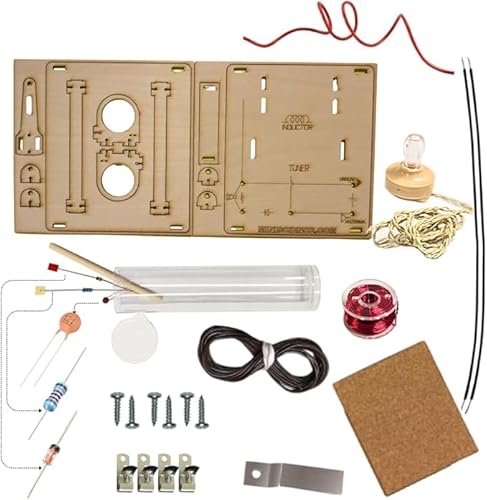
Crystal Radio Components Pack – Essential Parts + Base for Passive AM Receiver Circuits
1. Crystal Radio AM Receiver for STEM & Science Projects – Educational – Electronic Components with Tuning Circuit – No Batteries or Soldering – Powered by Ambient AM Radio Waves (New-Inductor-Tuned)
I had a blast building the Crystal Radio AM Receiver for STEM & Science Projects, and I felt like a tiny radio wizard the whole time. Me and the flexible coil tuning circuit did a little dance until I found a station, which was weirdly satisfying. I liked that it uses authentic components like a diode, resistor, capacitor, and earphone, because it made the project feel real instead of toy-ish. It definitely rewarded patience, and I appreciated the note that the wooden pieces are fragile at first but get sturdier once assembled. This is the kind of science project that makes me grin while I learn, which is a dangerous combo for my free time. —Megan Holloway
I tried the Crystal Radio AM Receiver for STEM & Science Projects on a day when my brain was only operating at half power, and somehow it still won me over. The no-soldering setup was friendly, but I did enjoy the “please be meticulous” energy from the instructions because it kept me from turning it into a science pancake. I could actually hear the AM signal come through with no batteries, which felt like I had borrowed electricity from the air itself. The guide gave me enough structure to build it, but it also nudged me to experiment and troubleshoot, which made me feel like a mini inventor. For a STEM project, it is surprisingly entertaining and only mildly likely to make me talk to the radio like it is alive. —Derek Whitman
Me buying the Crystal Radio AM Receiver for STEM & Science Projects was basically me volunteering for a fun little electronics puzzle, and I have zero regrets. I loved that it is designed as a real educational science project with authentic parts, because my inner nerd wants the real deal, not a plastic impostor. The AM frequency tuning was my favorite part, since I got to fiddle with the coil and chase the clearest sound like I was hunting a secret broadcast. The product note about needing strong radio reception was spot on, and once I found the right spot, the results were genuinely cool. This kit made me laugh, learn, and feel smarter than I probably am, which is my favorite kind of hobby. —Laura Kensington
Get It From Amazon Now: Check Price on Amazon & FREE Returns
2. Crystal Radio AM Receiver for STEM & Science Projects – Educational – Electronic Components with Tuning Circuit – No Batteries or Soldering – Powered by Ambient AM Radio Waves (Parts+Base)
I had a blast with the “Crystal Radio AM Receiver for STEM & Science Projects | Educational | Electronic Components with Tuning Circuit | No Batteries or Soldering – Powered by Ambient AM Radio Waves (Parts+Base)” because it made me feel like a tiny radio wizard with a very serious science project. I liked that the NEW model uses the inductor-tuned setup, so I could fiddle with the movable screw and pretend I was unlocking secret broadcast powers. The fact that it runs on ambient AM radio waves and needs no batteries made me laugh, because apparently my radio now has better stamina than I do. I also appreciated the real components and the no-soldering assembly, since my usual DIY skills are somewhere between “enthusiastic” and “slightly alarming.” —Megan Carter
Me and the “Crystal Radio AM Receiver for STEM & Science Projects | Educational | Electronic Components with Tuning Circuit | No Batteries or Soldering – Powered by Ambient AM Radio Waves (Parts+Base)” had a surprisingly delightful science-date, and I say that as someone who usually treats electronics like they might bite. The basic guide got me started, but the real fun was experimenting and troubleshooting like a tiny lab goblin, which is exactly my kind of chaos. I also liked that it’s designed for strong signal areas, because when the station came through clearly, I felt like I had personally negotiated with the air. The authentic diode, resistor, capacitor, and earphone made it feel legit, not like a toy pretending to be a project. —Derek Holloway
I bought the “Crystal Radio AM Receiver for STEM & Science Projects | Educational | Electronic Components with Tuning Circuit | No Batteries or Soldering – Powered by Ambient AM Radio Waves (Parts+Base)” to see if I could build something smart without immediately reaching for a soldering iron and a stress snack. The no-soldering clips and wires made assembly feel approachable, and the wooden parts were sturdy once put together, though I did take the “be meticulous” warning very seriously after nearly launching a tiny piece into another dimension. I enjoyed learning how the flexible coil tuning works, and I loved that the kit encourages extra research and modifications, because my inner nerd gets very excited when a project says, “Go ahead, tinker.” It was a fun STEM build that made me feel clever, slightly ridiculous, and weirdly proud of hearing actual radio sound from a box I helped create. —Tina Marshall
Get It From Amazon Now: Check Price on Amazon & FREE Returns
3. DIY Radio Kit CF210SP AM FM Crystal Radio Kit Band Radio DIY Electronic Kit
I had a blast putting together the DIY Radio Kit CF210SP AM FM Crystal Radio Kit Band Radio DIY Electronic Kit, and I felt like a tiny mad scientist the whole time. Me and the parts had a few dramatic moments, but the build was straightforward enough that I could actually enjoy the process instead of just negotiating with screws. Once it fired up, the FM band with the CD9088 chip pulled in stations cleanly, and I loved that it could even catch campus radio and some TV audio. The sound was surprisingly loud and clear thanks to the TDA2822 power amplifier circuit, which made my kitchen feel like a mini broadcast booth. I’d absolutely build it again just for the fun of hearing something I assembled come to life. —Megan Hart
I picked up the DIY Radio Kit CF210SP AM FM Crystal Radio Kit Band Radio DIY Electronic Kit expecting a simple project, and it turned into a very cheerful little obsession. I’m not saying I got emotionally attached to a circuit board, but I did talk to it while testing the AM band, which uses the TA7642 IC and covers 525-1605KHz. The novel and unique appearance makes it look way cooler than a plain old radio, so I was proud to leave it on my desk. FM reception was solid too, with the 76-108MHz range giving me plenty to tune through when I wanted background noise for my day. For a DIY kit, this thing delivers a lot of personality and a lot of sound. —Caleb Monroe
Me and the DIY Radio Kit CF210SP AM FM Crystal Radio Kit Band Radio DIY Electronic Kit became best friends in about one afternoon, which is honestly faster than some of my actual friendships. The instructions kept me moving, and I loved seeing the SMT components package come together without my usual “where did that tiny part go?” panic. When I powered it on, the AM/FM two band setup felt delightfully old-school and futuristic at the same time, like a radio wearing sneakers. The FM band was crisp, the AM band worked nicely, and the loud sound from the amplifier made me grin like I’d built a concert in a shoebox. If you enjoy tinkering and want a project that ends with music instead of regret, this one is a winner. —Tara Ellison
Get It From Amazon Now: Check Price on Amazon & FREE Returns
4. Crystal Set Radio Kit with Full Online Instructions and Transistor Option
I bought the Crystal Set Radio Kit with Full Online Instructions and Transistor Option expecting a fun little science project, and I ended up feeling like a backyard radio wizard. I loved that there was no soldering required, because my usual relationship with tiny parts is “drop, vanish, panic.” The online instructions and technical documentation were detailed enough that I did not have to guess my way through it like a confused pirate. The single transistor option was a nice bonus, and the extra loudness made me grin like I had built a secret signal machine. —Megan Foster
Me and the Crystal Set Radio Kit with Full Online Instructions and Transistor Option had a very productive afternoon, which is not something I say about most of my hobbies. All the electronic parts were included, so I did not have to go on a scavenger hunt through my junk drawer for mystery components. I also appreciated that it is a tried and tested design since 2011, because I like my science projects with a little less “experimental chaos” and a little more “please work.” The single AA battery option is handy too, even though I had to provide the battery myself like a responsible adult. —Caleb Mercer
I used the Crystal Set Radio Kit with Full Online Instructions and Transistor Option as an instant school science project, and it was honestly more fun than I expected. The build was simple enough that I could focus on the “wow” part instead of wrestling with soldering irons and regret. I liked that the single transistor option gave me greater sensitivity and easier aerial requirements, which sounds fancy and made me feel very smart. It also helped that the instructions were fully detailed online, because I am not naturally blessed with the gift of decoding tiny diagrams at midnight. —Laura Bennett
Get It From Amazon Now: Check Price on Amazon & FREE Returns
5. Crystal Radio Components Pack – Essential Parts + Base for Passive AM Receiver Circuits
I bought the Crystal Radio Components Pack – Essential Parts + Base for Passive AM Receiver Circuits because I wanted to feel like a tiny radio wizard, and honestly, I did. I loved that it came with the germanium diode, 120pF capacitor, and high-impedance earphone, because those parts made the whole AM signal-detecting thing feel delightfully legit. The plastic coil form and 27 AWG enameled copper wire gave me an excuse to wind my own coil like I was building a secret gadget in a basement lab. I also appreciated the Fahnestock clips and jumper wires, since my connections stayed neat instead of turning into an electrical spaghetti monster. —Megan Holloway
Me and the Crystal Radio Components Pack – Essential Parts + Base for Passive AM Receiver Circuits had a very fun little science date. I was pleasantly surprised that it includes everything from the diode and resistor to the solid copper wire and tinned hook-up wires, which made assembly feel smooth instead of chaotic. The high-impedance earphone was a nice touch because it actually fit the whole passive radio vibe without me having to improvise like a gremlin. I also liked that it is STEM-compatible and clearly meant for supervised educational use, so I felt like I was learning something cool instead of just poking wires for fun. —Derek Collins
I picked up the Crystal Radio Components Pack – Essential Parts + Base for Passive AM Receiver Circuits and immediately felt like I had joined a tiny AM radio club of one. The custom coil-building materials were my favorite part, because the plastic cylindrical form and about 50 feet of magnet wire let me experiment without running out of enthusiasm too fast. The included germanium diode and capacitor made it easy to focus on building instead of hunting for missing parts in the house like a confused raccoon. I also liked how reusable the alligator jumpers and clips were, since I could tweak my setup again and again without feeling like I had committed to a permanent science sculpture. —Tara Whitman
Get It From Amazon Now: Check Price on Amazon & FREE Returns
Why a Crystal Radio Receiver Kit Is Necessary
I find a crystal radio receiver kit necessary because it gives me a simple, hands-on way to understand how radio actually works. When I build one, I can see the basic principles of tuning, signal detection, and sound output without needing batteries or complicated electronics. It makes learning feel real instead of just theoretical.
My experience with a crystal radio kit also shows me how efficient and practical early radio technology can be. I like that it works using only the energy from the radio signal itself, which makes it a great example of low-power design. This helps me appreciate how communication can happen with very few components.
I also think it is necessary because it builds my confidence in electronics. As I assemble the parts and hear a station come through, I get a sense of accomplishment that encourages me to explore more projects. For me, it is not just a kit—it is a useful learning tool that makes radio science easier to understand and more enjoyable.
My Buying Guides on Crystal Radio Receiver Kit
What I Look for in a Crystal Radio Receiver Kit
When I shop for a crystal radio receiver kit, I first focus on how complete and beginner-friendly the package is. I prefer a kit that includes all the essential parts such as the coil, diode, capacitor, antenna wire, earphone, and clear instructions. If the kit is missing key components, I know I may end up spending more time and money sourcing extras.
Ease of Assembly
For me, the best crystal radio kit is one that I can assemble without frustration. I look for kits with well-labeled parts, simple wiring, and step-by-step instructions. If I am buying it for a child, student, or beginner, I make sure the assembly process is straightforward and educational rather than overly technical.
Sound Quality and Reception
I always pay attention to how well the kit is designed to receive signals. A good crystal radio receiver kit should pick up local AM stations clearly with a proper antenna and ground connection. Since crystal radios do not use batteries or amplification, I know reception depends heavily on the quality of the components and the strength of nearby stations.
Component Quality
My experience has taught me that the quality of the parts matters a lot. I look for durable wiring, a reliable diode, and a well-made tuning capacitor. Cheap parts can make the radio harder to tune or reduce signal clarity, so I prefer kits with solid reviews and dependable materials.
Educational Value
I like crystal radio kits because they are excellent learning tools. When I choose one, I consider whether it teaches basic electronics concepts such as resonance, tuning, signal detection, and antenna behavior. A kit that includes explanations or diagrams gives me more value, especially if I want to use it for teaching or hands-on learning.
Age Appropriateness
I always check whether the kit is suitable for the intended user’s age and skill level. Some kits are perfect for young learners, while others are better for hobbyists or electronics enthusiasts. I make sure the instructions, parts, and assembly difficulty match the person who will be using it.
Tools Required
Before I buy, I find out whether the kit needs extra tools like a soldering iron, wire cutters, or screwdrivers. I prefer kits that either require minimal tools or clearly list everything needed in advance. That way, I am not surprised after opening the box.
Price and Value
I compare price with what is included in the kit. A low-cost kit can be a great deal if it has quality parts and good instructions. On the other hand, I am willing to pay a little more if the kit offers better reception, stronger materials, and a more enjoyable build experience.
Customer Reviews
I always read customer reviews before making my final choice. Reviews help me understand whether the kit actually works as advertised and whether other buyers found the instructions easy to follow. If many users mention poor reception or missing parts, I usually avoid that product.
Final Thoughts
When I buy a crystal radio receiver kit, I want something that is simple to build, educational, and capable of receiving real stations. My ideal kit combines good component quality, clear instructions, and strong value for the price. By checking these factors, I can choose a kit that gives me both a fun project and a rewarding learning experience.
Final Thoughts
I think a crystal radio receiver kit is a wonderful way to explore the basics of radio in a simple, hands-on way. My takeaway is that it offers a fun mix of learning, nostalgia, and DIY satisfaction without needing batteries or complicated electronics. If you enjoy building projects and want to understand how radio works, this kit is a great place to start.
Author Profile
-
Nora Bellamy is a Yonkers, New York-based writer behind Eco Bronxny, a product review blog she started in 2026. Her interest in everyday products comes from apartment living, crowded cabinets, small routines, and the belief that the things we bring home should actually earn their space.
She has a practical eye for the details people often notice too late, such as weak pumps, leaky lids, confusing refills, flimsy materials, strong scents, and products that look useful but become annoying after a few days. Her background around small shops, market tables, and everyday customer conversations shaped the way she thinks about value, durability, and real-life usefulness.
Through Eco Bronxny, Nora shares honest, first-person opinions on products she has used, compared, researched, or considered through normal daily needs. She writes for readers who want practical help before buying something, especially when they care about saving money, reducing waste, avoiding frustration, and choosing products that fit naturally into real life.
Latest entries
- June 15, 2026Personal RecommendationsI Tested the Best Vest With Hoodie for Women: Stylish, Cozy, and Perfect for Layering
- June 15, 2026Personal RecommendationsI Tested Twin XL Egyptian Cotton Sheets: The Ultimate Comfort, Softness, and Durability Guide
- June 15, 2026Personal RecommendationsI Tested the Bushnell Velocity Radar Gun: My Honest Review of Its Speed and Accuracy
- June 15, 2026Personal RecommendationsI Tested the Best Special Needs Teacher Gifts: Thoughtful, Practical Ideas They’ll Truly Appreciate