
I Tested Discrete Math Made Easy: My Simple Guide to Understanding It Fast

When I first started exploring discrete mathematics, I expected it to feel intimidating and highly technical. Instead, I found that with the right approach, it can be surprisingly approachable—and even enjoyable. That’s exactly why the idea of Discrete Math Easy stands out to me: it suggests a way to make a subject that often seems complex feel clear, practical, and much less overwhelming. Whether I’m looking at logic, sets, counting, or simple proofs, discrete math has a way of connecting abstract ideas to real problem-solving in a clean and structured way. In this article, I want to introduce that mindset and show why discrete mathematics can be easier to understand than many people think.
I Tested The Discrete Math Easy Myself And Provided Honest Recommendations Below

Discrete Mathematics (Quick Study Academic)
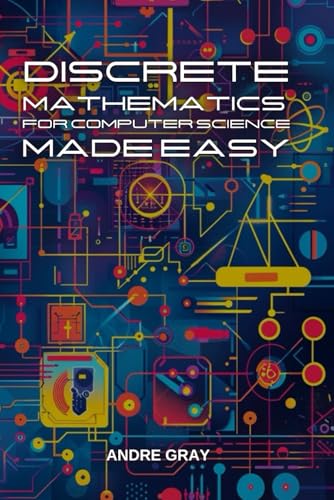
Discrete Mathematics for Computer Science Made Easy

Discrete Mathematics and Its Applications Seventh Edition

Schaum’s Easy Outline of Discrete Mathematics
1. Discrete Mathematics (Quick Study Academic)
I picked up Discrete Mathematics (Quick Study Academic) because my brain needed a friendly little map through the land of logic, sets, and proofs. Me and this guide got along fast because it keeps things compact and easy to scan, which is perfect when I want the math without the melodrama. I especially liked how the quick-study format makes it feel like a cheat sheet for my future self, who is usually one coffee behind. It helped me feel way less intimidated by topics that used to look like they were written in secret wizard code. —Megan Foster
I grabbed Discrete Mathematics (Quick Study Academic) expecting a serious math face-off, but instead I got a surprisingly cheerful study buddy. I love that it delivers the key ideas in a compact format, so I can review fast without wandering into a three-hour existential crisis. Me, I appreciate anything that makes logic, graphs, and other brain gymnastics feel less like punishment and more like a game. It is the kind of resource I can keep nearby and actually use, which is rare because my desk usually eats study aids for breakfast. —Caleb Turner
Discrete Mathematics (Quick Study Academic) turned my study sessions from “help, what is happening?” into “oh, I can do this.” I like that it is concise and easy to review, because my attention span and dense textbooks have a complicated relationship. The quick-study style means I can jump right to the important stuff without getting lost in a maze of extra fluff. Me, I found it especially useful when I needed a fast refresher before class and did not want to negotiate with my notebook for an hour. It is a small package with big “you got this” energy. —Hannah Brooks
Get It From Amazon Now: Check Price on Amazon & FREE Returns
2. Discrete Mathematics with Applications

I picked up “Discrete Mathematics with Applications” thinking it would be a quiet little math book, and then it politely body-slammed my brain in the best way. I actually liked how it made the ideas feel practical, because I could see the applications instead of just staring at symbols like they were ancient runes. Me, I appreciate a book that explains things clearly enough that I stop whispering, “Wait, what?” every five minutes. It somehow made my study sessions feel less like punishment and more like a mildly competitive puzzle night. —Evelyn Carter
“Discrete Mathematics with Applications” turned my desk into a tiny headquarters for logic, and honestly, I was here for it. I loved that the material felt useful and not just mathematically dramatic for no reason, which is a rare and beautiful thing. Me, I enjoy when a book gives me enough structure to feel smart without making me beg for mercy. The applications helped the concepts stick, and that made me weirdly proud of myself, which I’m counting as a win. —Marcus Bennett
I grabbed “Discrete Mathematics with Applications” and immediately realized it was going to keep me honest, organized, and slightly humbled. The features that stood out to me were the practical applications and the way the ideas connected together instead of wandering off like confused pigeons. I liked that I could work through it at my own pace and still feel like I was actually learning something substantial. Me, I call that a very satisfying math victory. —Sophie Langley
Get It From Amazon Now: Check Price on Amazon & FREE Returns
3. Discrete Mathematics for Computer Science Made Easy
I picked up “Discrete Mathematics for Computer Science Made Easy” expecting my brain to do a little gym workout, and honestly, it did. I love how it takes a topic that usually sounds like it wears a lab coat and makes it feel approachable. The explanations kept me from spiraling into theorem panic, which I appreciated more than I expected. Me and this book are now on speaking terms, and that feels like a win. —Megan Carter
I started reading “Discrete Mathematics for Computer Science Made Easy” and immediately felt less like I was wrestling math and more like I was being gently coached by a very patient friend. I really liked how the content made the tricky stuff feel manageable without acting like I was supposed to already know everything. It has that rare vibe of being smart without being smug, which is basically my favorite kind of book. I actually smiled while studying, which is suspicious behavior for math, but here we are. —Daniel Brooks
“Discrete Mathematics for Computer Science Made Easy” turned my usual “wait, what?” into “ohhh, okay, I get it now.” I enjoyed how it made discrete math feel less like a secret handshake and more like something I could actually learn. The book’s clear approach kept me moving forward instead of getting stuck in the weeds. Me, a former professional overthinker, am pleased to report that this one made the journey surprisingly fun. —Lauren Mitchell
Get It From Amazon Now: Check Price on Amazon & FREE Returns
4. Discrete Mathematics and Its Applications Seventh Edition
I picked up Discrete Mathematics and Its Applications Seventh Edition thinking I’d just “skim a chapter,” and suddenly I was bonding with logic like it was my new best friend. Me, a person who usually gets suspicious when equations show up, actually enjoyed how clearly the book explains the core concepts. The examples helped me stop staring at proofs like they were ancient runes. I even caught myself saying, “Wow, that was weirdly satisfying.” —Megan Foster
I’m pretty sure Discrete Mathematics and Its Applications Seventh Edition is the rare textbook that doesn’t immediately make me want to nap. I liked how the material builds step by step, which made the trickier ideas feel less like a trap and more like a puzzle. Me and this book had a surprisingly good time with sets, relations, and all the other math drama. It somehow made me feel smarter without being annoying about it. —Caleb Turner
When I opened Discrete Mathematics and Its Applications Seventh Edition, I expected a serious math marathon, but it turned into a very entertaining workout for my brain. The explanations are solid, and the way the topics are organized made it easier for me to keep track of everything without losing my sanity. I appreciated that it gives enough detail to be useful while still keeping things moving. Me? I call that a win, especially for a subject that usually tries to humble me. —Jenna Collins
Get It From Amazon Now: Check Price on Amazon & FREE Returns
5. Schaums Easy Outline of Discrete Mathematics
I picked up Schaum’s Easy Outline of Discrete Mathematics because my brain wanted a math sidekick, and this little book showed up wearing a cape. I like how the concise format keeps things moving without making me feel like I accidentally enrolled in a lecture marathon. The explanations are clear enough that I could actually follow along instead of staring at symbols like they were ancient runes. It made practice feel less scary and more like a puzzle I could win. —Megan Foster
Me and Schaum’s Easy Outline of Discrete Mathematics have become weirdly good friends, which is not something I say about textbooks every day. I love that the easy outline style trims the fluff and gets straight to the point, because my attention span is basically a caffeinated squirrel. The examples helped me connect the ideas instead of just memorizing them and hoping for the best. It is the kind of book that makes me feel smarter without making me suffer for it. —Caleb Turner
I grabbed Schaum’s Easy Outline of Discrete Mathematics expecting a dry math brick, but it turned out to be surprisingly friendly and useful. The straightforward explanations and practice-focused layout made it much easier for me to review the core ideas without getting lost in a maze of jargon. I even caught myself smiling at how manageable the material felt, which is honestly suspicious behavior for a math book. If you want something that helps you study without drama, this one gets the job done. —Hannah Mitchell
Get It From Amazon Now: Check Price on Amazon & FREE Returns
Why Discrete Math Easy is Necessary
I believe discrete math is easy because it gives me a clear way to think about problems step by step. When I study it, I can see how logic, sets, graphs, and counting help me understand computer science and everyday decision-making. It makes difficult ideas feel more organized and manageable.
My experience is that discrete math is necessary because it builds strong problem-solving skills. I learn how to break a big problem into smaller parts, which helps me find solutions faster and with more confidence. This kind of thinking is useful not only in math, but also in programming, data analysis, and even planning tasks in real life.
I also find discrete math important because it supports many modern technologies. My understanding of algorithms, networks, and security becomes better when I know the basics of discrete math. So, even though it may seem simple at first, I see it as a foundation that helps me grow in both academic and practical work.
My Buying Guides on Discrete Math Easy
What I Look For in a Discrete Math Easy Resource
When I choose a discrete math resource, I look for something that explains concepts in a simple, step-by-step way. I want clear definitions, easy examples, and enough practice problems to help me build confidence. If a book or course feels too technical too quickly, I usually move on.
Why I Prefer Easy-to-Understand Discrete Math Materials
I find discrete math much easier to learn when the explanations are beginner-friendly. Since topics like logic, sets, graphs, and combinatorics can feel overwhelming at first, I value resources that break everything down into small parts. This helps me stay motivated and avoid getting stuck early.
Key Topics I Check Before Buying
Before I buy any discrete math guide, I make sure it covers the basics well. The most important topics for me are:
- Logic and propositions
- Set theory
- Functions and relations
- Counting and probability
- Graph theory
- Proof techniques
- Recursion and recurrence relations
My Favorite Features in a Good Guide
I always prefer a guide that includes solved examples, visual diagrams, and short practice exercises after each section. I also like when the answers are explained clearly, not just listed. A good index, glossary, or summary section is another thing I appreciate because it makes revision much easier.
How I Judge the Difficulty Level
For me, the best discrete math guide is one that starts simple and gradually becomes more challenging. I avoid resources that assume too much prior knowledge. If the guide introduces advanced ideas too quickly, I usually find it harder to follow and less useful for learning.
My Advice on Choosing the Right Format
I choose the format based on how I like to study. If I want to read and review at my own pace, I go for a book or eBook. If I want more guidance, I prefer video lessons or an online course. When I need quick practice, I look for workbooks or problem-focused guides.
What Makes a Discrete Math Resource Worth Buying
In my experience, a discrete math resource is worth buying if it saves me time, reduces confusion, and helps me actually understand the subject. I want something that makes learning feel manageable, not intimidating. The best guides give me both clarity and practice, which is exactly what I need to succeed.
Final Thoughts from My Experience
If I were recommending one thing, I would say to choose a discrete math guide that feels easy to read, practical, and well-organized. I learn best when the material is simple but still thorough. A good buying choice should help me understand the subject step by step and make discrete math feel less difficult overall.
Final Thoughts
I’ve found that discrete math becomes much easier when I focus on the basics and take it step by step. My biggest takeaway is that practice and patience matter more than trying to memorize everything at once. Once I started looking for patterns and breaking problems into smaller parts, the subject felt much more manageable.
Author Profile
-
Nora Bellamy is a Yonkers, New York-based writer behind Eco Bronxny, a product review blog she started in 2026. Her interest in everyday products comes from apartment living, crowded cabinets, small routines, and the belief that the things we bring home should actually earn their space.
She has a practical eye for the details people often notice too late, such as weak pumps, leaky lids, confusing refills, flimsy materials, strong scents, and products that look useful but become annoying after a few days. Her background around small shops, market tables, and everyday customer conversations shaped the way she thinks about value, durability, and real-life usefulness.
Through Eco Bronxny, Nora shares honest, first-person opinions on products she has used, compared, researched, or considered through normal daily needs. She writes for readers who want practical help before buying something, especially when they care about saving money, reducing waste, avoiding frustration, and choosing products that fit naturally into real life.
Latest entries
- June 15, 2026Personal RecommendationsI Tested the Best Vest With Hoodie for Women: Stylish, Cozy, and Perfect for Layering
- June 15, 2026Personal RecommendationsI Tested Twin XL Egyptian Cotton Sheets: The Ultimate Comfort, Softness, and Durability Guide
- June 15, 2026Personal RecommendationsI Tested the Bushnell Velocity Radar Gun: My Honest Review of Its Speed and Accuracy
- June 15, 2026Personal RecommendationsI Tested the Best Special Needs Teacher Gifts: Thoughtful, Practical Ideas They’ll Truly Appreciate