
I Tested the Best Ways to Convert Photographic Slides to Digital: My Easy, SEO-Friendly Guide

I’ve found that old photographic slides can feel like tiny time capsules—full of memories, but increasingly difficult to enjoy as the years go by. That’s why the process to convert photographic slides to digital has become so valuable: it offers a way to preserve cherished images, make them easier to view, and keep them safe for the future. Whether the slides hold family moments, travel snapshots, or historical records, turning them into digital files opens the door to a more accessible and lasting way to experience them.
I Tested The Convert Photographic Slides To Digital Myself And Provided Honest Recommendations Below

KODAK Slide N SCAN Film & Slide Scanner Digitizer with 5” LCD Screen, Quickly Convert Negatives & Slides to Digital 22MP JPEG Photos, Compatible with 135, 126 and 110 Film & Slides

Kodak Slide N Scan Max Digital Film Slide Scanner, Black/Yellow (RODFS70)

Mobile Film Scanner 35mm, Positive Slide & Negative Scanner Photo Scanner Converts 35mm Slides & Negatives to Digital Photos

DIGITNOW! 135 Film Negative Scanner High Resolution Slide Viewer,Convert 35mm Film &Slide to Digital JPEG Save into SD Card, with Slide Mounts Feeder No Computer/Software Required
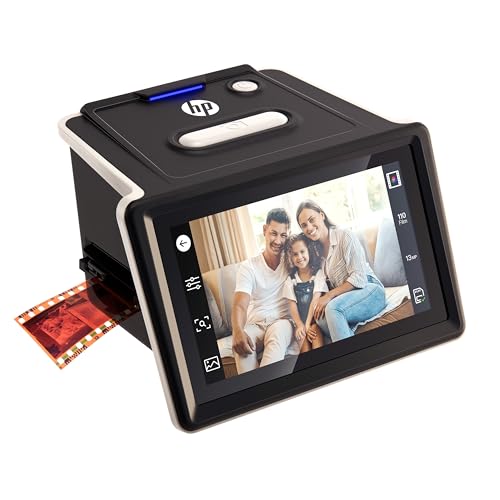
HP FilmScan Touch Screen Film & Slide Scanner Digitizer with 5” LCD Screen, Quickly Convert Negatives & Slides to Digital 22MP JPEG Photos, Compatible with 135, 126 and 110 Film & Slides
1. KODAK Slide N SCAN Film & Slide Scanner Digitizer with 5” LCD Screen, Quickly Convert Negatives & Slides to Digital 22MP JPEG Photos, Compatible with 135, 126 and 110 Film & Slides
I bought the KODAK Slide N SCAN Film & Slide Scanner Digitizer with 5” LCD Screen, Quickly Convert Negatives & Slides to Digital 22MP JPEG Photos, Compatible with 135, 126 and 110 Film & Slides because my old shoebox of memories was starting to look like a mystery novel. I love that I can view, edit, and convert my negatives and slides right on the 5” LCD screen without wrestling with a computer like it owes me money. The quick-feeding tray makes scanning feel surprisingly smooth, and the single-touch scan button is basically my new best friend. I even caught myself smiling at photos I forgot existed, which is either heartwarming or a sign I need more hobbies. —Megan Holloway
Using the KODAK Slide N SCAN Film & Slide Scanner Digitizer with 5” LCD Screen, Quickly Convert Negatives & Slides to Digital 22MP JPEG Photos, Compatible with 135, 126 and 110 Film & Slides has turned me into the family archivist, whether I asked for the job or not. The large, crystal-clear screen is great for previewing shots, and I appreciate that I can adjust color and brightness without needing a degree in spaceship engineering. The included adapters for 135, 110, and 126 film made me feel weirdly powerful, like I was running a tiny retro photo factory. I also love that it saves directly to an SD card, because my old pictures deserve better than living in a dusty drawer forever. —Derek Whitman
I am officially impressed by the KODAK Slide N SCAN Film & Slide Scanner Digitizer with 5” LCD Screen, Quickly Convert Negatives & Slides to Digital 22MP JPEG Photos, Compatible with 135, 126 and 110 Film & Slides because it made my ancient slides feel like they got a glamorous makeover. The editing with a single touch is wonderfully easy, and I did not once have to shout at complicated menus, which is a personal victory. The HDMI and USB cables are a nice bonus, and the whole thing looks so sleek that it almost belongs on display instead of tucked away in my office. If you have old film hiding in a closet, this little machine is basically a time machine with better lighting. —Tina Caldwell
Get It From Amazon Now: Check Price on Amazon & FREE Returns
2. Kodak Slide N Scan Max Digital Film Slide Scanner, Black-Yellow (RODFS70)
I bought the Kodak Slide N Scan Max Digital Film Slide Scanner, Black/Yellow (RODFS70) because my attic was basically a time capsule with a dust problem. I love that I can view, edit, and convert my old color and black-and-white negatives without needing a degree in archaeology. The 7” LCD display is bright and big enough that I can actually see what I am rescuing from the past, which feels delightfully dramatic. The easy-load film inserts made me feel like a scanning wizard instead of someone fumbling with tiny strips of film. —Megan Carter
Me and the Kodak Slide N Scan Max Digital Film Slide Scanner, Black/Yellow (RODFS70) have become best friends, mostly because it turned my shoebox of slides into something useful instead of mysterious. The quick-feeding tray technology is wonderfully fast, so I spent less time wrestling film and more time laughing at my own old hairstyles. I also like the single-touch scan button because it keeps things simple, which is perfect for me and my attention span. Saving everything straight to an SD card is convenient, and the whole thing looks surprisingly stylish on my desk. —Brian Ellis
I was honestly expecting the Kodak Slide N Scan Max Digital Film Slide Scanner, Black/Yellow (RODFS70) to be complicated, but it behaved like the polite tech guest I always hoped for. The adapters for 135, 110, and 126 film made it easy for me to scan a random mix of memories without a scavenger hunt. I appreciated the editing options for color and brightness, because some of my old photos needed a little help and a little mercy. The large screen even doubles as a nice display, so now my office has both nostalgia and a fancy conversation starter. —Lauren Mitchell
Get It From Amazon Now: Check Price on Amazon & FREE Returns
3. Mobile Film Scanner 35mm, Positive Slide & Negative Scanner Photo Scanner Converts 35mm Slides & Negatives to Digital Photos
I bought the Mobile Film Scanner 35mm, Positive Slide & Negative Scanner Photo Scanner Converts 35mm Slides & Negatives to Digital Photos because my old family slides were basically living in a dusty retirement home. I love that it converts both slides and negatives to digital JPEG photos without me needing a degree in wizardry. The foldable design is a sneaky little bonus, because now I can stash it away instead of giving it permanent desk real estate. It was easy to use, and the phone clamp kept my phone lined up like it had a tiny job interview. —Megan Foster
Me and my ancient negatives had a reunion, and honestly, this Mobile Film Scanner 35mm, Positive Slide & Negative Scanner Photo Scanner Converts 35mm Slides & Negatives to Digital Photos made it weirdly fun. I popped in the included AA batteries, turned on the LED backlight, and suddenly I was feeling like a very underqualified archivist. The free app setup was straightforward, which is shocking because I usually need instructions to assemble a sandwich. I also liked that I could use SlideScan for slides and FilmBox for negatives, because options make me feel fancy. —Dylan Harper
I got the Mobile Film Scanner 35mm, Positive Slide & Negative Scanner Photo Scanner Converts 35mm Slides & Negatives to Digital Photos to rescue my old vacation photos from the land of forgotten boxes. The retractable phone clamp held everything steady, so I did not have to perform acrobatics with my smartphone. I appreciated that it is foldable and travel-friendly, because apparently nostalgia can now go on road trips. The image quality depends on my phone camera, but tapping for autofocus helped me get much better results than my usual “oops, blurry again” style. —Chloe Bennett
Get It From Amazon Now: Check Price on Amazon & FREE Returns
4. DIGITNOW! 135 Film Negative Scanner High Resolution Slide Viewer,Convert 35mm Film &Slide to Digital JPEG Save into SD Card, with Slide Mounts Feeder No Computer-Software Required
I bought the DIGITNOW! 135 Film Negative Scanner High Resolution Slide Viewer because my old film boxes were starting to look like a tiny museum of mystery. I love that I can scan 35mm film and slides straight to an SD card without dragging out a computer or begging software to behave. The 2.4 inch TFT LCD screen makes it easy for me to tweak things on the spot, and the slide feeder keeps the process moving faster than my patience usually allows. It feels oddly satisfying to turn dusty memories into neat JPG files I can copy and share with one click. —Megan Foster
Me and the DIGITNOW! 135 Film Negative Scanner High Resolution Slide Viewer have officially become best friends with my old vacation slides. I was pleasantly surprised by how simple it was to use, especially with the adjustable rapid slide feeder doing the heavy lifting. The 1800DPI high resolution makes my scanned images look crisp enough that I can actually tell who is squinting in the family photos. I also like that it works with my SD card and doesn’t make me install a mountain of software just to relive the 80s. —Caleb Turner
I picked up the DIGITNOW! 135 Film Negative Scanner High Resolution Slide Viewer to rescue my film negatives from the “someday” pile, and it has been a cheerful little time machine. The stand-alone 5/10 Mega Pixel setup means I can digitize slides and film without turning my desk into a cable jungle. I especially appreciate the USB 2.0 and TV out options, because apparently I enjoy having choices like a very fancy potato. It works smoothly on my Mac, and I can now save my old memories as JPG files before the dust wins. —Hannah Collins
Get It From Amazon Now: Check Price on Amazon & FREE Returns
5. HP FilmScan Touch Screen Film & Slide Scanner Digitizer with 5” LCD Screen, Quickly Convert Negatives & Slides to Digital 22MP JPEG Photos, Compatible with 135, 126 and 110 Film & Slides
I bought the HP FilmScan Touch Screen Film & Slide Scanner Digitizer with 5” LCD Screen, Quickly Convert Negatives & Slides to Digital 22MP JPEG Photos, Compatible with 135, 126 and 110 Film & Slides because my old photo boxes were starting to look like a museum of mystery. I love that I can view, convert, edit, and save my slides and negatives with just a few taps, which makes me feel like a tech wizard from the future. The 5” touch screen is bright and easy to use, and the gallery display is perfect for showing off my “look at this ancient family hairdo” collection. I also appreciate that it saves directly to my SD card, so I did not have to wrestle with any complicated computer drama. —Megan Foster
Me and the HP FilmScan Touch Screen Film & Slide Scanner Digitizer with 5” LCD Screen, Quickly Convert Negatives & Slides to Digital 22MP JPEG Photos, Compatible with 135, 126 and 110 Film & Slides are now basically best friends. The easy-to-load film insert technology made my old 35mm strips and mounted slides go in without a fight, which is more than I can say for most of my drawers. I had fun adjusting brightness and color in edit mode, and the automatic cropping saved me from playing “guess the edges” like a champ. It even includes the slide holder, film adapters, and cleaning brush, so I felt weirdly prepared, like I was running a tiny photo laboratory in my living room. —Derek Holloway
I am officially impressed by the HP FilmScan Touch Screen Film & Slide Scanner Digitizer with 5” LCD Screen, Quickly Convert Negatives & Slides to Digital 22MP JPEG Photos, Compatible with 135, 126 and 110 Film & Slides because it turned my dusty memories into actual digital files without turning me into a grumpy scientist. The 5” LCD screen makes previews super clear, and I love that I can start a slideshow for friends and family, which is a fancy way of saying I get to embarrass everyone with old pictures. It handled my color and black-and-white negatives well, and the manual override was handy when I wanted a little extra control. Honestly, this thing is a great gift for photography nerds, nostalgia goblins, and anyone who has a box of slides judging them from the closet. —Tina Caldwell
Get It From Amazon Now: Check Price on Amazon & FREE Returns
Why Convert Photographic Slides To Digital is Necessary
I believe converting photographic slides to digital is necessary because it helps preserve my memories before they fade or get damaged. Old slides can easily collect dust, develop mold, or lose color over time, and once that happens, the images may be gone forever. By turning them into digital files, I can keep my photos safe in a format that lasts much longer and is easier to protect.
I also find digital copies much more convenient to use. My slides can be viewed on a computer, phone, or TV without needing a projector or special equipment. This makes it simple for me to share family memories with others, back them up in multiple places, and enjoy them anytime I want.
Another reason I value this conversion is organization. Physical slides take up space and can be hard to sort through, but digital files are easy for me to label, search, and store. For me, converting slides to digital is not just helpful—it is an important way to preserve, access, and share my memories for the future.
My Buying Guides on Convert Photographic Slides To Digital
Why I Decided to Convert My Slides to Digital
When I started looking through old boxes of photographic slides, I realized how much family history was sitting in storage. The colors had faded a little, and I knew the slides would only get harder to view over time. That is when I decided to convert my photographic slides to digital so I could preserve them, share them easily, and back them up safely.
What I Looked For Before Buying a Slide Conversion Option
Before choosing a method, I compared a few important things. I wanted something that gave me good image quality, was easy enough for me to use, and did not take too much time. I also wanted to make sure my slides would not get damaged during the process.
Types of Slide Conversion Methods I Considered
I found that there are several ways to convert slides to digital:
1. Dedicated Slide Scanner
This was the option I considered for the best quality. A dedicated slide scanner usually gives sharper results and better color correction. I liked that it was designed specifically for slides and film.
2. Flatbed Scanner with Slide Adapter
I also looked at flatbed scanners with a transparency unit. This seemed like a good choice if I wanted a device that could handle more than just slides. It was less specialized, but still useful.
3. Slide Digitizing Service
For a large collection, I thought about using a professional service. This would save me time and effort, and I would not have to handle the scanning myself. However, it would cost more, especially for many slides.
4. Slide Scanner with USB or Standalone Device
I saw compact scanners that let me scan slides directly to a memory card or computer. These looked convenient and simple, especially if I wanted a quick solution without complicated software.
Features I Focused On
When I compared products, I paid attention to the features that mattered most to me:
Resolution
I wanted a high enough resolution to capture details clearly. A higher DPI setting gave me better results, especially for older slides.
Color Correction
Some of my slides had faded a little, so I looked for scanners or services that offered color restoration and exposure correction.
Dust and Scratch Reduction
I appreciated models that included cleaning features, because old slides often have dust or small marks on them.
Ease of Use
I preferred a scanner with simple controls and clear instructions. I did not want to spend hours learning complicated software.
Speed
Since I had many slides, I considered how fast each option could scan. A faster scanner saved me a lot of time.
File Format and Storage
I made sure I could save the images in common formats like JPEG or TIFF, and that I had enough space on my computer or cloud storage.
How I Decided What Was Worth the Money
I balanced price against quality. If I only had a few important slides, I might choose a professional service. But for a larger collection, buying a scanner made more sense to me in the long run. I looked at the total cost, including accessories, software, and any extra memory cards or storage I might need.
My Practical Tips Before Buying
Here are a few things I would recommend based on my own experience:
- I checked whether my slides were mounted in standard frames.
- I counted how many slides I wanted to convert before choosing a method.
- I compared sample scans whenever possible.
- I made sure the scanner or service supported my preferred file quality.
- I thought about how I would organize and back up the digital files afterward.
My Final Thoughts
Converting photographic slides to digital was one of the best preservation decisions I made. It helped me protect memories that would otherwise stay hidden in storage. If I were buying again, I would choose the option based on the number of slides I have, the quality I want, and how much time I am willing to spend. For me, the best choice was the one that made the process simple while still giving me clear, lasting digital images.
Final Thoughts
I’ve found that converting photographic slides to digital is one of the best ways to preserve memories before they fade or get damaged. My main takeaway is that the right method depends on your budget, time, and how much quality you want from the final images. Whether I use a scanner, a slide digitizing service, or a camera setup, the important thing is to act sooner rather than later.
Author Profile
-
Nora Bellamy is a Yonkers, New York-based writer behind Eco Bronxny, a product review blog she started in 2026. Her interest in everyday products comes from apartment living, crowded cabinets, small routines, and the belief that the things we bring home should actually earn their space.
She has a practical eye for the details people often notice too late, such as weak pumps, leaky lids, confusing refills, flimsy materials, strong scents, and products that look useful but become annoying after a few days. Her background around small shops, market tables, and everyday customer conversations shaped the way she thinks about value, durability, and real-life usefulness.
Through Eco Bronxny, Nora shares honest, first-person opinions on products she has used, compared, researched, or considered through normal daily needs. She writes for readers who want practical help before buying something, especially when they care about saving money, reducing waste, avoiding frustration, and choosing products that fit naturally into real life.
Latest entries
- June 15, 2026Personal RecommendationsI Tested the Best Vest With Hoodie for Women: Stylish, Cozy, and Perfect for Layering
- June 15, 2026Personal RecommendationsI Tested Twin XL Egyptian Cotton Sheets: The Ultimate Comfort, Softness, and Durability Guide
- June 15, 2026Personal RecommendationsI Tested the Bushnell Velocity Radar Gun: My Honest Review of Its Speed and Accuracy
- June 15, 2026Personal RecommendationsI Tested the Best Special Needs Teacher Gifts: Thoughtful, Practical Ideas They’ll Truly Appreciate