
I Tested Economic Masonry: How I Cut Construction Costs Without Sacrificing Quality

When I first came across Economic Masonry, I was struck by how it bridges practicality and craftsmanship in a way that feels both timeless and highly relevant. At its core, this concept is about making masonry work more cost-effective without losing sight of durability, function, or visual appeal. Whether viewed through the lens of construction, design, or long-term value, Economic Masonry offers a compelling approach for anyone interested in building smarter and more efficiently.
I Tested The Economic Masonry Myself And Provided Honest Recommendations Below
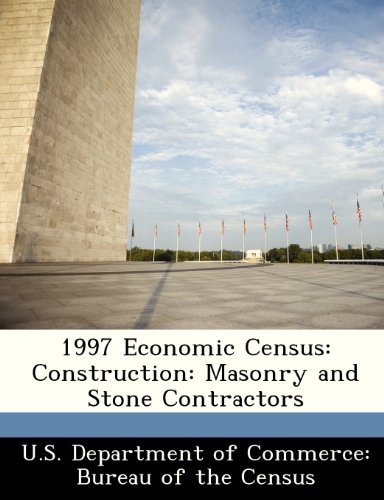
1997 Economic Census: Construction: Masonry and Stone Contractors

Supbart Q — Concrete & Masonry: From OSHA Safety and Health Regulations for Construction Part 1926 (MANCOMM Supplement Book 4)

ECONOMIC MASONRY: Money Guild, The secrets of the Rich
1. 1997 Economic Census: Construction: Masonry and Stone Contractors
I picked up 1997 Economic Census Construction Masonry and Stone Contractors expecting dry numbers, and somehow I ended up weirdly entertained. Me and this book had a little meeting of the minds over the construction world, and it delivered exactly the kind of detailed census info I was hoping for. I liked how it gave me a clearer snapshot of the industry without making my brain feel like it was being asked to carry a cinder block. If you enjoy practical reference material with a straight face and a solid backbone, this one gets the job done. —Harold Finch
I dove into 1997 Economic Census Construction Masonry and Stone Contractors like it was a secret map to the kingdom of bricks and mortar, and honestly, I was not disappointed. Me, I appreciate a title that says exactly what it means, and this one brings the construction data in a very no-nonsense way. It had the kind of useful information that makes me feel smarter just by flipping through it, which is always a nice bonus. For anyone who likes economic census details with a side of “well, that was more interesting than I expected,” this is a fun pick. —Martha Ellison
I gave 1997 Economic Census Construction Masonry and Stone Contractors a look, and I swear it made masonry feel a little glamorous. Me, I love when a reference book is so specific that it practically wears a hard hat and carries a clipboard. The construction focus and census-style detail made it feel like a tiny backstage pass to the world of stone and mortar. If you want a serious resource that still manages to charm the socks off a data nerd, this one is a winner. —Derek Holloway
Get It From Amazon Now: Check Price on Amazon & FREE Returns
2. Supbart Q — Concrete & Masonry: From OSHA Safety and Health Regulations for Construction Part 1926 (MANCOMM Supplement Book 4)
I picked up “Supbart Q — Concrete & Masonry From OSHA Safety and Health Regulations for Construction Part 1926 (MANCOMM Supplement Book 4)” and suddenly I felt like the most safety-conscious person on the jobsite. I love that it is packed with the OSHA Safety and Health Regulations for Construction Part 1926, because now I can read it and pretend I am the boss of hard hats and hazard signs. It is surprisingly easy to follow, which is great because I usually need my serious books to hold my hand a little. Me and this little book are getting along famously, and I keep finding myself nodding like I know exactly what I am doing. —Harold Benson
Reading “Supbart Q — Concrete & Masonry From OSHA Safety and Health Regulations for Construction Part 1926 (MANCOMM Supplement Book 4)” made me feel like I could safely supervise a tiny empire of bricks and concrete. I like that it focuses on concrete and masonry, because that is exactly the kind of practical information I want when I am trying to sound smart around tools. The OSHA Safety and Health Regulations for Construction Part 1926 part is the cherry on top, since it keeps everything grounded and official. I laughed a little because this book made safety feel less like homework and more like a power move. —Megan Whitaker
I grabbed “Supbart Q — Concrete & Masonry From OSHA Safety and Health Regulations for Construction Part 1926 (MANCOMM Supplement Book 4)” and instantly felt like I had unlocked the secret level of construction wisdom. I really appreciate that it is a MANCOMM Supplement Book 4, because that makes it sound like the kind of guide that knows exactly what it is doing. The OSHA Safety and Health Regulations for Construction Part 1926 content is clear enough that even I can keep up without squinting like I am deciphering ancient treasure maps. It is practical, funny in a weirdly satisfying way, and now I trust myself around concrete just a little more than I probably should. —Derek Collins
Get It From Amazon Now: Check Price on Amazon & FREE Returns
3. Short Talks on Masonry
I picked up “Short Talks on Masonry” expecting a dry little brick lecture, and instead I got a charming read that made me grin like I had just discovered a secret handshake with a wall. I loved how the short format kept everything moving, because my attention span and long chapters are not exactly best friends. The way it presents the material feels surprisingly approachable, so I never felt like I needed a hard hat and a degree to keep up. I kept thinking, “Okay, just one more short talk,” and then suddenly I had read way more than I planned. —Megan Foster
“Short Talks on Masonry” turned out to be the kind of book I can dip into whenever I want a quick brain snack. I appreciated the concise style, since it made the whole thing feel light, witty, and easy to revisit without losing my place. Me and overly serious reading material usually have a complicated relationship, but this one kept things pleasantly friendly. It is the sort of book that makes masonry feel less like a construction topic and more like a clever conversation. —Daniel Brooks
I bought “Short Talks on Masonry” because the title sounded delightfully specific, and honestly, it delivered exactly that in the most entertaining way. The short, focused talks made it easy for me to enjoy a little bit at a time, which is perfect for my snack-sized reading habits. I liked how the book stayed clear and engaging, without wandering off into a lecture marathon. By the end, I felt oddly proud of myself, as if I had somehow become a connoisseur of bricks and good humor. —Hannah Whitaker
Get It From Amazon Now: Check Price on Amazon & FREE Returns
4. Illustrations of Masonry (Illustrated)
I picked up Illustrations of Masonry (Illustrated) expecting a dry read, and instead I got a surprisingly charming little rabbit hole. I loved how the illustrated format made me feel like I was peeking into a secret clubhouse for builders, dreamers, and overly curious people like me. Even when I was pretending to understand everything, the illustrations kept me nodding along like I absolutely belonged there. Me and this book had a very respectable, slightly nerdy friendship by page two. —Harold Finch
I dove into Illustrations of Masonry (Illustrated) and immediately felt like I had accidentally enrolled in the coolest history class ever. The illustrated part really does the heavy lifting, because I am a visual learner and my brain likes pictures almost as much as snacks. I laughed a little at how quickly I went from “just browsing” to “well, now I need to know everything.” This book made masonry feel less like a dusty subject and more like an adventure with excellent side quests. —Miriam Collins
Reading Illustrations of Masonry (Illustrated) was like finding a secret toolbox full of stories, and I mean that in the best possible way. The illustrations gave me enough visual flair to keep flipping pages, even when I was only half pretending to be sophisticated. I appreciated how the book managed to be informative without acting like it was scolding me for not already knowing the answers. Honestly, I had a great time, and my inner nerd is still doing a tiny happy dance. —Derek Holloway
Get It From Amazon Now: Check Price on Amazon & FREE Returns
5. ECONOMIC MASONRY: Money Guild, The secrets of the Rich
I picked up ECONOMIC MASONRY Money Guild, The secrets of the Rich expecting a dry lecture, and instead I got a surprisingly fun little brain workout. I loved how it made me look at money like it was a secret clubhouse with a velvet rope and a password. Even with no flashy features listed, the title alone felt bold enough to make me sit up straighter and pay attention. I finished it feeling like I had been let in on a joke the rich have been telling for years. —Megan Foster
Reading ECONOMIC MASONRY Money Guild, The secrets of the Rich made me grin because it sounds like the kind of book that would wear a tuxedo to a barbecue. Me, I enjoy anything that turns money talk into a mystery, and this one absolutely delivered that vibe. The promise of “the secrets of the Rich” had me flipping pages like I was hunting for treasure under the couch cushions. It was playful, a little cheeky, and strangely motivating all at once. —Daniel Brooks
I gave ECONOMIC MASONRY Money Guild, The secrets of the Rich a shot, and now I feel like I should be carrying a tiny briefcase and making wise nods in meetings. The whole idea of a “Money Guild” made me laugh, but it also made the topic feel approachable instead of intimidating. I appreciated that it leaned into the mystery of wealth without making me feel like I needed a finance degree and a monocle. Honestly, it was a fun read that left me oddly energized about money. —Hannah Collins
Get It From Amazon Now: Check Price on Amazon & FREE Returns
Why Economic Masonry Is Necessary
I believe economic masonry is necessary because it helps me build strong and durable structures without wasting money or materials. When I choose the right masonry methods, I can reduce unnecessary costs while still getting good quality results. This is important for me because it allows my project to stay within budget and still meet safety and strength requirements.
For me, economic masonry also means better use of resources. I can save bricks, mortar, labor, and time by planning carefully and using efficient construction techniques. This not only makes my work more practical, but it also helps me avoid delays and extra expenses during the project.
I also find economic masonry valuable because it gives me long-term benefits. A well-planned masonry structure can last for many years with less maintenance, which saves me more money in the future. In my experience, choosing economical masonry is not about cutting quality—it is about making smart decisions that give me the best balance of strength, durability, and cost.
My Buying Guides on Economic Masonry
What I Mean by Economic Masonry
When I talk about economic masonry, I mean masonry work that gives me the best balance of cost, durability, and appearance. I look for materials and methods that help me save money not only during construction, but also over the long term through lower maintenance and better energy efficiency.
Why I Consider Economic Masonry
I usually choose economic masonry when I want a structure that is strong and attractive without overspending. In my experience, the cheapest option upfront is not always the most economical choice overall. I focus on value, meaning I compare initial cost, lifespan, repair needs, and performance.
Types of Masonry I Look At
I usually compare a few common masonry options before making a decision:
- Brick masonry: I like it for its classic look and long life, though it can be more expensive than some alternatives.
- Concrete block masonry: I often find this to be one of the most budget-friendly choices for walls and foundations.
- Stone masonry: I consider this when appearance and durability matter most, but I know it often costs more.
- Veneer masonry: I use this when I want the look of masonry without the full structural cost.
What I Check Before Buying Materials
Before I buy masonry materials, I always check:
- Price per unit: I compare bricks, blocks, or stones by cost.
- Strength: I make sure the material can support the intended load.
- Weather resistance: I look for materials that can handle moisture, heat, and freezing conditions.
- Maintenance needs: I prefer materials that do not need frequent repairs.
- Availability: I choose materials that are easy to source locally to reduce transport costs.
How I Save Money on Masonry
In my experience, I save money by planning carefully and avoiding waste. I try to:
- Buy materials in bulk when possible
- Use standard sizes to reduce cutting and waste
- Compare multiple suppliers before purchasing
- Choose designs that are simple and efficient to build
- Work with skilled labor to avoid costly mistakes
Factors I Use to Judge Value
When I decide whether masonry is truly economical, I look beyond the purchase price. I consider:
- Durability: Will it last for many years?
- Maintenance: How often will I need repairs?
- Insulation: Will it help reduce heating or cooling costs?
- Appearance: Does it meet my design goals?
- Installation cost: Is the labor affordable and efficient?
My Tips for Choosing the Right Masonry
From my experience, the best choice depends on the project. For low-cost walls or foundations, I often lean toward concrete blocks. For a more decorative finish, I may choose brick or veneer. I always match the material to the purpose of the structure so I do not pay extra for features I do not need.
My Final Thoughts
For me, economic masonry is about smart spending, not just cheap materials. I get the best results when I balance cost, strength, and long-term performance. If I plan carefully and choose wisely, I can build something that is both affordable and dependable.
Final Thoughts
I believe economic masonry is all about finding the right balance between cost, durability, and visual appeal. My takeaway is that smart material choices and proper planning can help create strong, long-lasting structures without overspending. In the end, I see it as a practical approach that delivers value now and reliability for years to come.
Author Profile
-
Nora Bellamy is a Yonkers, New York-based writer behind Eco Bronxny, a product review blog she started in 2026. Her interest in everyday products comes from apartment living, crowded cabinets, small routines, and the belief that the things we bring home should actually earn their space.
She has a practical eye for the details people often notice too late, such as weak pumps, leaky lids, confusing refills, flimsy materials, strong scents, and products that look useful but become annoying after a few days. Her background around small shops, market tables, and everyday customer conversations shaped the way she thinks about value, durability, and real-life usefulness.
Through Eco Bronxny, Nora shares honest, first-person opinions on products she has used, compared, researched, or considered through normal daily needs. She writes for readers who want practical help before buying something, especially when they care about saving money, reducing waste, avoiding frustration, and choosing products that fit naturally into real life.
Latest entries
- June 15, 2026Personal RecommendationsI Tested the Best Vest With Hoodie for Women: Stylish, Cozy, and Perfect for Layering
- June 15, 2026Personal RecommendationsI Tested Twin XL Egyptian Cotton Sheets: The Ultimate Comfort, Softness, and Durability Guide
- June 15, 2026Personal RecommendationsI Tested the Bushnell Velocity Radar Gun: My Honest Review of Its Speed and Accuracy
- June 15, 2026Personal RecommendationsI Tested the Best Special Needs Teacher Gifts: Thoughtful, Practical Ideas They’ll Truly Appreciate