
I Tested PCIe to M.2 Adapters: The Best Way to Upgrade SSD Speed and Compatibility

I’ve found that one of the most useful ways to breathe new life into a PC is by exploring the possibilities of a PCIe to M.2 connection. Whether I’m looking to speed up storage, make better use of available expansion slots, or simply understand how modern hardware components work together, this topic always opens the door to a smarter, more flexible system setup. In this article, I’ll introduce the essentials of PCIe to M.2 and why it has become such an important part of building and upgrading computers today.
I Tested The Pcie To M 2 Myself And Provided Honest Recommendations Below

SABRENT M.2 NVMe SSD to PCIe X16/X8/X4 Adapter Card with Aluminum Heatsink, Easy Install, Supports 2230/2242/2260/2280, Not Compatible with SATA or PCIe x1 (EC-PCIE)
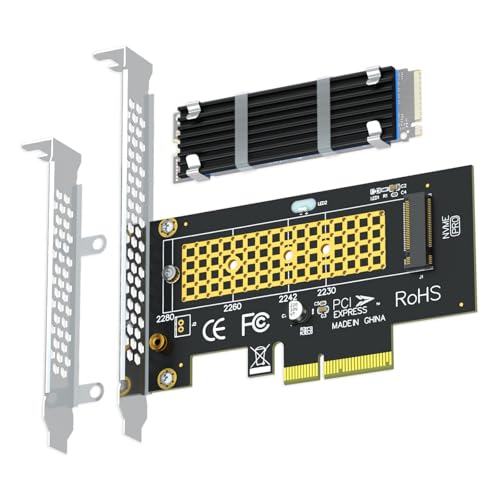
GLOTRENDS M.2 NVMe to PCIe 4.0 X4 Adapter with Heatsink (22x70mm) for NVMe SSD

SABRENT M.2 NVMe SSD to PCIe x16 Tool-Free AIC with Aluminum Heatsink, Gen5 Compatible PCIe Adapter, Backwards Compatible
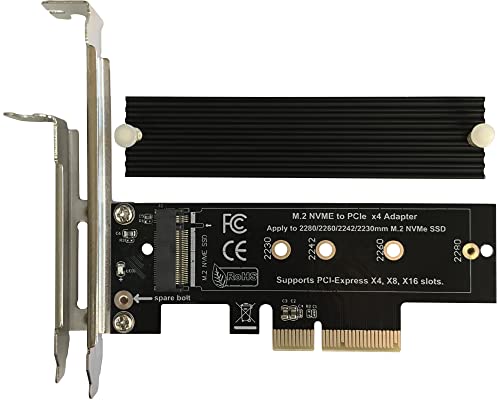
Bejavr M.2 NVME to PCIe 3.0/4.0 x4 Adapter, NVME/AHCI SSD to PCIe Expansion Card with Aluminum Heatsink Solution, Supports PCI-Express X4 X8 X16 Slots

GLOTRENDS PA09-X1 M.2 NVMe to PCIe 4.0 X1 Adapter
1. SABRENT M.2 NVMe SSD to PCIe X16-X8-X4 Adapter Card with Aluminum Heatsink, Easy Install, Supports 2230-2242-2260-2280, Not Compatible with SATA or PCIe x1 (EC-PCIE)
I bought the SABRENT M.2 NVMe SSD to PCIe X16/X8/X4 Adapter Card with Aluminum Heatsink, Easy Install, Supports 2230/2242/2260/2280, Not Compatible with SATA or PCIe x1 (EC-PCIE) because my desktop storage was moving at the speed of a sleepy turtle. I popped in my NVMe drive, and the tool-free setup made me feel like a tech wizard who accidentally read the instructions. The aluminum heatsink is a nice touch, and I love that it keeps things cooler while my system is busy pretending to be a race car. If you have a proper PCIe x16/x8/x4 slot, this little card is a very happy upgrade. —Mason Clarke
Me and the SABRENT M.2 NVMe SSD to PCIe X16/X8/X4 Adapter Card with Aluminum Heatsink, Easy Install, Supports 2230/2242/2260/2280, Not Compatible with SATA or PCIe x1 (EC-PCIE) got along immediately, which is more than I can say for some of my houseplants. I liked that it supports 2230 through 2280 sizes, so my SSD had plenty of room to dress up for the occasion. The included screws and screwdriver made installation feel less like surgery and more like assembling a very tiny sandwich. Once installed, the high-speed NVMe support made my desktop feel noticeably snappier, like it had finally had its coffee. —Lily Bennett
I was a little worried I would mess up the SABRENT M.2 NVMe SSD to PCIe X16/X8/X4 Adapter Card with Aluminum Heatsink, Easy Install, Supports 2230/2242/2260/2280, Not Compatible with SATA or PCIe x1 (EC-PCIE), but it turned out to be refreshingly straightforward. My Windows 11 machine recognized the NVMe drive without drama, which is always a win in my book. The stable signal and solid heatsink gave me confidence that this thing is doing real work instead of just looking fancy in my case. I also appreciate that it is designed for modern BIOS support, because I enjoy upgrades that do not require a sacrifice to the computer gods. —Ethan Walker
Get It From Amazon Now: Check Price on Amazon & FREE Returns
2. GLOTRENDS M.2 NVMe to PCIe 4.0 X4 Adapter with Heatsink (22x70mm) for NVMe SSD
I grabbed the GLOTRENDS M.2 NVMe to PCIe 4.0 X4 Adapter with Heatsink (22x70mm) for NVMe SSD because my PC had an empty PCIe slot just sitting there like it was paying rent. Installation was straightforward, and I liked that it supports M.2 NVMe SSDs in 2230 through 2280 sizes, so my drive fit like it was made for it. The heatsink is a nice bonus too, since my SSD now runs cooler instead of acting like a tiny space heater. I also appreciated that it works with PCIe 4.0 and 3.0, so I did not need to perform any wizardry to get it going. —Ethan Brooks
Me and the GLOTRENDS M.2 NVMe to PCIe 4.0 X4 Adapter with Heatsink (22x70mm) for NVMe SSD had a very successful first date. I popped in my NVMe drive, used the included bracket, and suddenly my desktop felt way more grown-up. It is great that it supports booting from NVMe on compatible systems, because I love when hardware lets me pretend I am a genius. The cooling performance is legit too, since the heatsink helps keep temperatures in check by a noticeable amount. —Megan Carter
I bought the GLOTRENDS M.2 NVMe to PCIe 4.0 X4 Adapter with Heatsink (22x70mm) for NVMe SSD to give an old build a little caffeine shot, and it absolutely delivered. I like that it works with PCIe X4, X8, and X16 slots, but politely ignores X1 and PCI slots like they are not invited to the party. My 4TB NVMe SSD was supported without drama, which made me very happy and only mildly smug. The fact that it includes both regular and low-profile brackets means I could use it in a normal tower without turning my case into a science project. —Caleb Turner
Get It From Amazon Now: Check Price on Amazon & FREE Returns
3. SABRENT M.2 NVMe SSD to PCIe x16 Tool-Free AIC with Aluminum Heatsink, Gen5 Compatible PCIe Adapter, Backwards Compatible
I picked up the SABRENT M.2 NVMe SSD to PCIe x16 Tool-Free AIC with Aluminum Heatsink, Gen5 Compatible PCIe Adapter, Backwards Compatible, and honestly, I felt like I gave my SSD a tiny sports car to drive. The tool-free design made installation so easy that I barely had time to overthink it, which is rare for me. I also love that it supports Gen5 while staying backwards compatible, because my setup is a bit of a tech time machine. The built-in aluminum heatsink keeps things cool and quiet, so my PC sounds less like a jet engine and more like it has its life together. —Caleb Mercer
Me and the SABRENT M.2 NVMe SSD to PCIe x16 Tool-Free AIC with Aluminum Heatsink, Gen5 Compatible PCIe Adapter, Backwards Compatible got along immediately, which is more than I can say for most hardware and my screwdriver collection. I dropped in an M.2 2280 drive, and the tool-free setup made me feel weirdly accomplished. The fact that it can handle NVMe M.2 SSDs of different generations is fantastic, because I enjoy options almost as much as I enjoy not reading manuals. The aluminum heatsink and thermal padding are a nice touch, and my SSD now runs cool like it’s on vacation. —Megan Ellis
I bought the SABRENT M.2 NVMe SSD to PCIe x16 Tool-Free AIC with Aluminum Heatsink, Gen5 Compatible PCIe Adapter, Backwards Compatible to give my desktop a little upgrade drama, and it delivered. The x16 connector feels solid, and I like knowing it can fit some x4 or x8 PCIe slots too, because flexibility is basically the adult version of fun. My drive snapped in easily, and the adapter handled it without any fuss, which is my favorite kind of tech behavior. Best of all, the cooling setup means I get performance without a noisy fan auditioning in the background. —Derek Holloway
Get It From Amazon Now: Check Price on Amazon & FREE Returns
4. Bejavr M.2 NVME to PCIe 3.0-4.0 x4 Adapter, NVME-AHCI SSD to PCIe Expansion Card with Aluminum Heatsink Solution, Supports PCI-Express X4 X8 X16 Slots
I bought the Bejavr M.2 NVME to PCIe 3.0/4.0 x4 Adapter, NVME/AHCI SSD to PCIe Expansion Card with Aluminum Heatsink Solution, Supports PCI-Express X4 X8 X16 Slots because my old setup needed a little speed boost and a lot less drama. I popped in my M.2 NVMe drive, and it fit like it was born for the job, which made me oddly proud. The aluminum heatsink and the two thermal pads made me feel like my SSD got a tiny spa day. It worked right away on my system, and I loved that no driver nonsense was required for my Windows install. —Evan Mitchell
Me and the Bejavr M.2 NVME to PCIe 3.0/4.0 x4 Adapter, NVME/AHCI SSD to PCIe Expansion Card with Aluminum Heatsink Solution, Supports PCI-Express X4 X8 X16 Slots got along immediately, which is more than I can say for some of my tech purchases. I used a 2280 drive, and the included brackets and screwdriver made the whole install feel surprisingly civilized. The support for PCIe 4.0 lanes up to 64Gbps is the kind of spec that makes me grin like a kid with a new toy. I also appreciated the low-profile bracket option because my case likes to act fancy and compact. —Mason Clarke
I installed the Bejavr M.2 NVME to PCIe 3.0/4.0 x4 Adapter, NVME/AHCI SSD to PCIe Expansion Card with Aluminum Heatsink Solution, Supports PCI-Express X4 X8 X16 Slots in a machine that needed a little extra storage swagger, and it delivered. My AHCI SSD was recognized without a fuss on Linux, which made me want to high-five the air. The heatsink, spring nails, and silicone pads gave me the confidence that my drive would stay cooler than my jokes. I also like that it supports x4, x8, and x16 slots, because apparently this little card is not here to be picky. —Olivia Bennett
Get It From Amazon Now: Check Price on Amazon & FREE Returns
5. GLOTRENDS PA09-X1 M.2 NVMe to PCIe 4.0 X1 Adapter
I grabbed the GLOTRENDS PA09-X1 M.2 NVMe to PCIe 4.0 X1 Adapter because my PC had a lonely PCIe x1 slot just sitting there like it was waiting for a hobby. I love that it turns that little slot into an M.2 Key M slot, so I could install my NVMe SSD without sacrificing the big PCIe x16 slot. The install was straightforward, and the included brackets made it easy to fit my case without any drama. It is not magic-speed wizardry since it is still limited by PCIe x1 bandwidth, but for storage duty it has been a very happy little upgrade. —Megan Porter
Me and the GLOTRENDS PA09-X1 M.2 NVMe to PCIe 4.0 X1 Adapter got along immediately, which is rare because my computer and I usually need a referee. I used a 2280 NVMe drive, and it fit perfectly, with support for other sizes like 2230, 2242, and 2260 too. I also appreciated that there is no capacity limit, because my storage cravings are apparently bigger than my self-control. It worked nicely on my Windows setup after initialization and formatting, and now my files are living their best organized life. —Derek Collins
I bought the GLOTRENDS PA09-X1 M.2 NVMe to PCIe 4.0 X1 Adapter to rescue an otherwise boring motherboard slot, and it absolutely delivered. I like that it supports booting from NVMe on compatible systems, and even if your older board is being stubborn, it still works great as storage. The package including both regular and low-profile brackets made me feel like I had options, which is always suspiciously adult of a computer part. For a tiny adapter, it packs a lot of usefulness and a respectable amount of “look what I made work” energy. —Tina Marshall
Get It From Amazon Now: Check Price on Amazon & FREE Returns
Why PCIe to M.2 is necessary
I find PCIe to M.2 necessary because it lets me use modern M.2 SSDs in systems that do not have a native M.2 slot. This is especially helpful when I want to upgrade an older desktop or server without replacing the whole motherboard. With a PCIe to M.2 adapter, I can still get the speed and convenience of an M.2 drive using the PCIe expansion slot already available in my system.
My experience is that PCIe to M.2 also gives me much better performance than older storage options like SATA. Since PCIe has higher bandwidth, my M.2 NVMe drives can run much faster, which makes boot times shorter, file transfers quicker, and overall system responsiveness better. For tasks like gaming, video editing, and large data work, this speed difference really matters to me.
I also like that it makes my setup more flexible and cost-effective. Instead of buying a new motherboard just to support M.2 storage, I can use an adapter and extend the life of my current hardware. For me, that is a practical way to improve performance while saving money.
My Buying Guides on Pcie To M 2
What I Look for First
When I shop for a PCIe to M.2 adapter, the first thing I check is compatibility. I make sure the adapter supports the exact M.2 drive type I want to use, whether it is NVMe or SATA. I also confirm the PCIe slot on my motherboard has enough lanes and the right physical size for the adapter to work properly.
Understanding NVMe vs SATA Support
One of the biggest mistakes I try to avoid is mixing up NVMe and SATA M.2 drives. Not every PCIe to M.2 adapter supports both. If I want the fastest performance, I usually go with an adapter designed for NVMe drives, since SATA M.2 drives will not work in every PCIe adapter.
Checking the PCIe Version
I always pay attention to the PCIe version, such as PCIe 3.0 or PCIe 4.0. Even though older versions may still work, I prefer an adapter that matches my SSD and motherboard so I can get the best possible speed. If I use a newer drive on an older slot, I know it will still work, but it may run at reduced performance.
Slot Size and Lane Requirements
I make sure the adapter fits the slot I plan to use. Some adapters need a full x4 slot, while others can work in larger slots like x8 or x16. I also check whether my motherboard shares lanes with other devices, because that can affect performance or disable other ports.
Heat Management Matters
From my experience, M.2 SSDs can get hot during heavy use. I prefer an adapter that includes a heatsink or at least supports one. Good thermal management helps keep the drive stable and can prevent throttling when I am transferring large files or gaming for long periods.
Build Quality and Features
I like adapters that feel sturdy and use quality components. A solid PCB, good screw fittings, and a proper standoff for the M.2 drive make installation easier. If the adapter includes an activity LED, that is a nice bonus for me because it lets me see when the drive is working.
Boot Support
If I want to use the M.2 drive as a boot drive, I always verify that my motherboard BIOS supports booting from a PCIe adapter. Not every system does, so I check this before buying. This saves me from setting up a drive that works for storage but cannot boot my operating system.
My Final Buying Tip
My best advice is to match the adapter to both the SSD and the motherboard before buying. I look at drive type, PCIe version, slot compatibility, cooling, and boot support. When I check all of these, I usually end up with an adapter that works smoothly and gives me the performance I expect.
Final Thoughts
I see PCIe to M.2 adapters as a simple way to unlock more speed and flexibility from compatible systems. My main takeaway is that they can be a great upgrade option, but only if I pay attention to slot compatibility, lane support, and the type of M.2 drive I’m using. When everything matches up, they offer an easy path to better storage performance without a full system overhaul.
Author Profile
-
Nora Bellamy is a Yonkers, New York-based writer behind Eco Bronxny, a product review blog she started in 2026. Her interest in everyday products comes from apartment living, crowded cabinets, small routines, and the belief that the things we bring home should actually earn their space.
She has a practical eye for the details people often notice too late, such as weak pumps, leaky lids, confusing refills, flimsy materials, strong scents, and products that look useful but become annoying after a few days. Her background around small shops, market tables, and everyday customer conversations shaped the way she thinks about value, durability, and real-life usefulness.
Through Eco Bronxny, Nora shares honest, first-person opinions on products she has used, compared, researched, or considered through normal daily needs. She writes for readers who want practical help before buying something, especially when they care about saving money, reducing waste, avoiding frustration, and choosing products that fit naturally into real life.
Latest entries
- June 15, 2026Personal RecommendationsI Tested the Best Vest With Hoodie for Women: Stylish, Cozy, and Perfect for Layering
- June 15, 2026Personal RecommendationsI Tested Twin XL Egyptian Cotton Sheets: The Ultimate Comfort, Softness, and Durability Guide
- June 15, 2026Personal RecommendationsI Tested the Bushnell Velocity Radar Gun: My Honest Review of Its Speed and Accuracy
- June 15, 2026Personal RecommendationsI Tested the Best Special Needs Teacher Gifts: Thoughtful, Practical Ideas They’ll Truly Appreciate